

- info@pennair.com
- 888-631-7638
- Service Counter: 717-840-1600

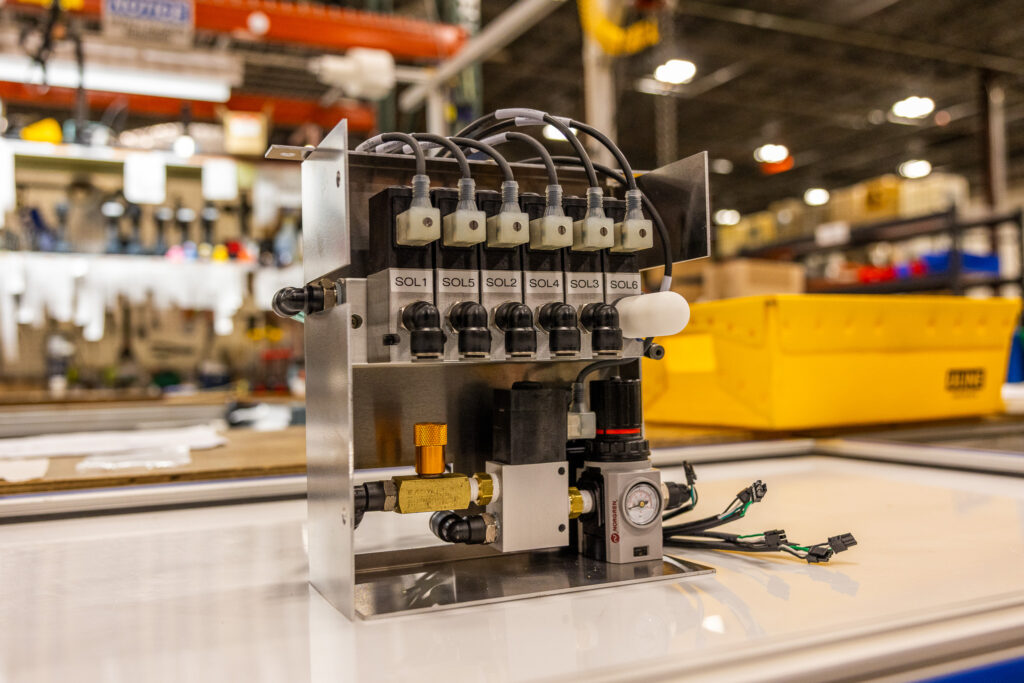
A pneumatic valve manifold assembly combines multiple directional control valves on a common manifold or base. The valves share centralized air supply and exhaust passages, creating a more compact and organized method of controlling multiple pneumatic functions.
The terms are often used interchangeably, but a valve island commonly refers to a manifolded valve assembly that also includes integrated wiring, electronics, network communication, diagnostics, or distributed I/O. A valve manifold may use individual wiring, a multipin connector, or a network connection depending on its configuration.
Choosing a pneumatic valve manifold requires evaluating the number of valve stations, valve functions, required airflow, operating pressure, port sizes, voltage, electrical connections, communication protocol, mounting location, environmental conditions, and potential future expansion. The manifold must provide enough flow for all connected actuators without creating excessive pressure loss.
Additional valves can be added when the existing manifold uses a modular design and has available capacity. Some systems allow new valve stations or base modules to be installed, while fixed-length manifolds cannot be expanded. The air supply, electrical capacity, communication configuration, and total flow demand should be reviewed before modifying an existing manifold.
An FRL should be sized according to the system’s required airflow, inlet pressure, outlet pressure, connection size, filtration requirements, acceptable pressure drop, and peak demand. An undersized air preparation assembly can restrict airflow and reduce equipment performance, even when the inlet and outlet ports appear to match the existing piping.
An FRL or air preparation assembly should generally be installed upstream of the pneumatic valves, cylinders, tools, or equipment it protects. It should be positioned as close as practical to the point of use while remaining accessible for pressure adjustment, filter replacement, bowl inspection, draining, and maintenance.
No. Many modern pneumatic valves and cylinders are lubricated during manufacturing and are designed to operate without additional oil. A lubricator should only be used when the downstream equipment requires lubricated air. Once oil lubrication is introduced, some components may need to remain lubricated because the added oil can remove the original factory-applied grease.
PennAir provides turnkey pneumatic subassemblies for machine builders, integrators, and industrial facilities. From valve manifolds to air preparation packages, we deliver complete, tested solutions that arrive ready to install.
By outsourcing pneumatic assembly work to PennAir, your team can reduce bench labor, simplify procurement, minimize assembly errors, and stay focused on higher-value activities. The result is faster builds, improved efficiency, and smoother project execution.
Pneumatic Assembly Request – Send us an email with a BOM, schematic, or photos to get started
PennAir supports OEMs, machine builders, system integrators, and industrial facilities throughout Pennsylvania, New Jersey, Maryland, Delaware, West Virginia, and Virginia with production capabilities backed by a 100,000 sq ft facility, ISO 9001 certification, UL 508A certification, ISNetworld listing, and more than 4,400 valve stacks assembled.
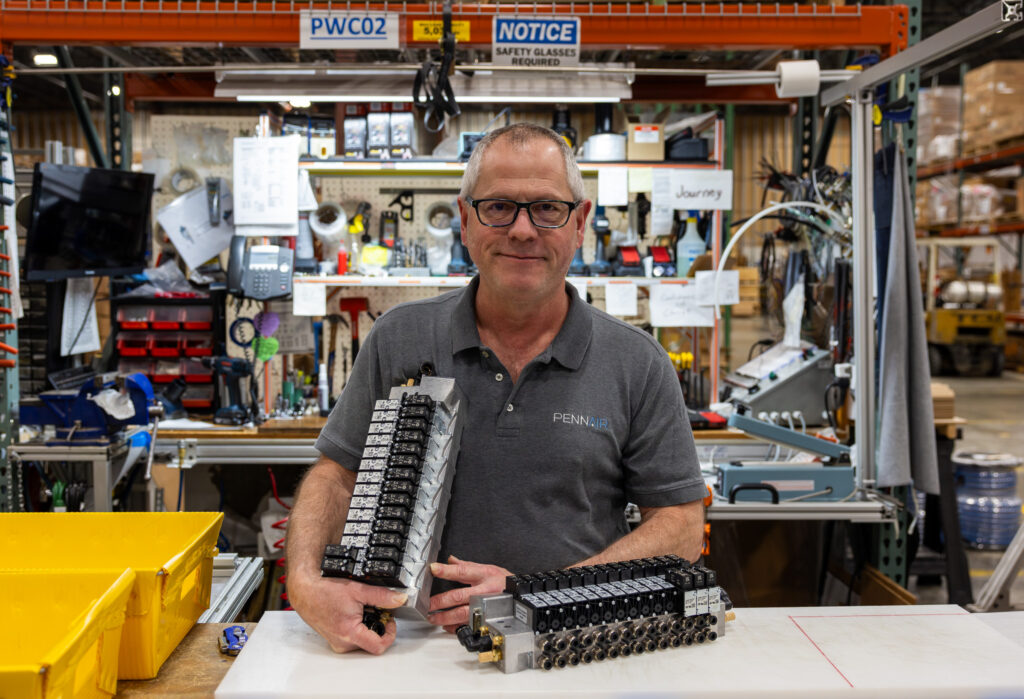
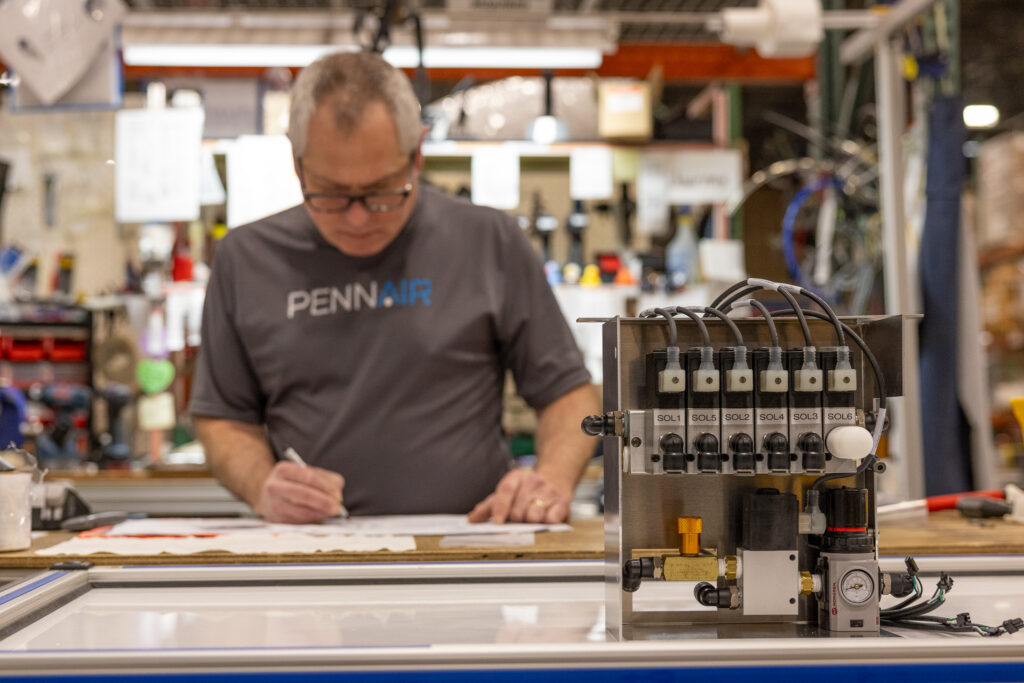
Duane Diehl, Senior Assembly Technician, with his 4,000th valve assembly.
PennAir builds custom pneumatic valve stack assemblies, valve manifold assemblies, valve banks, and valve islands based on your equipment, automation, and installation requirements.
A pneumatic valve manifold combines multiple directional control valves on a common base with shared air supply and exhaust passages. Configurations with integrated electrical connections, network communications, diagnostics, or distributed I/O may also be called valve islands or valve terminals.
Regardless of the terminology used, PennAir delivers an organized, centralized pneumatic control solution that arrives assembled, tested, labeled, and ready to install.
Pneumatic valve assembly capabilities include:
A valve manifold or valve island can reduce tubing, fittings, potential leak points, wiring labor, panel space, and installation time by consolidating multiple valves into a single pneumatic and electrical assembly.
A strong solution for OEMs, machine builders, packaging machinery, automation systems, and industrial facilities seeking cleaner designs, shorter installation times, and more reliable system performance.
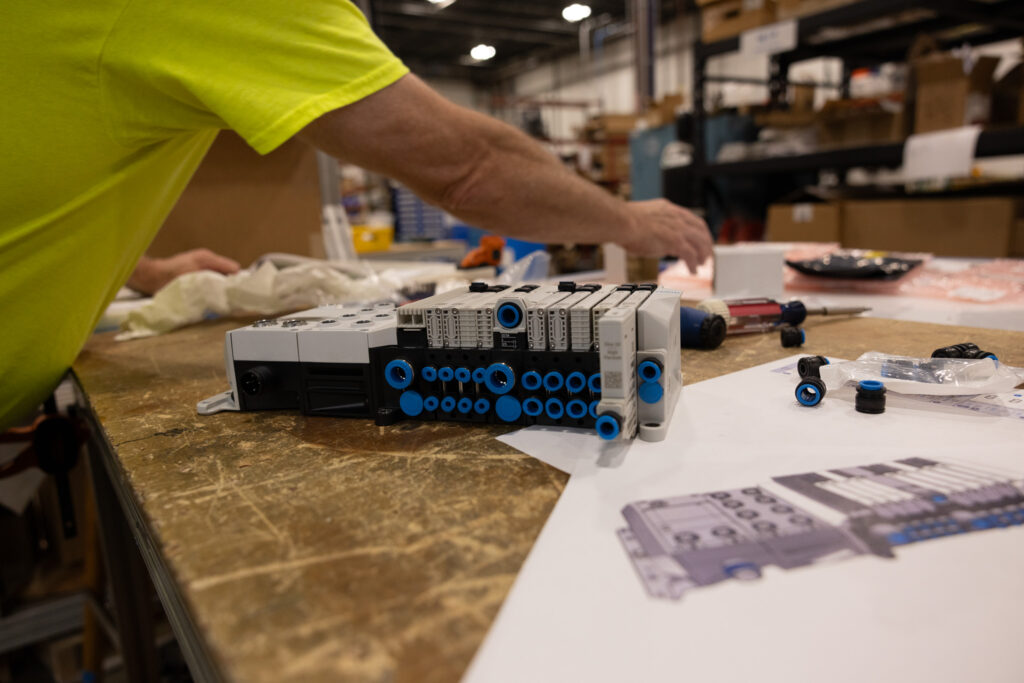
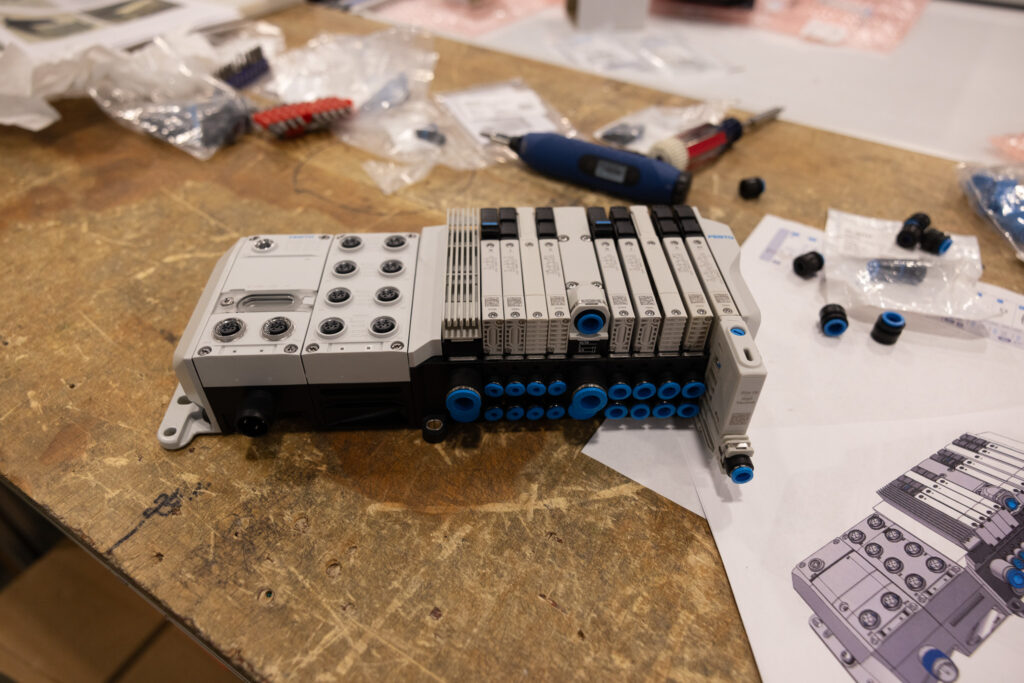
PennAir builds pneumatic valve manifold and valve stack assemblies using components from trusted industrial pneumatic manufacturers, including:
Our team helps evaluate valve functions, flow requirements, port sizes, electrical connections, communication protocols, mounting requirements, and component availability to develop an assembly that fits your machine standards.
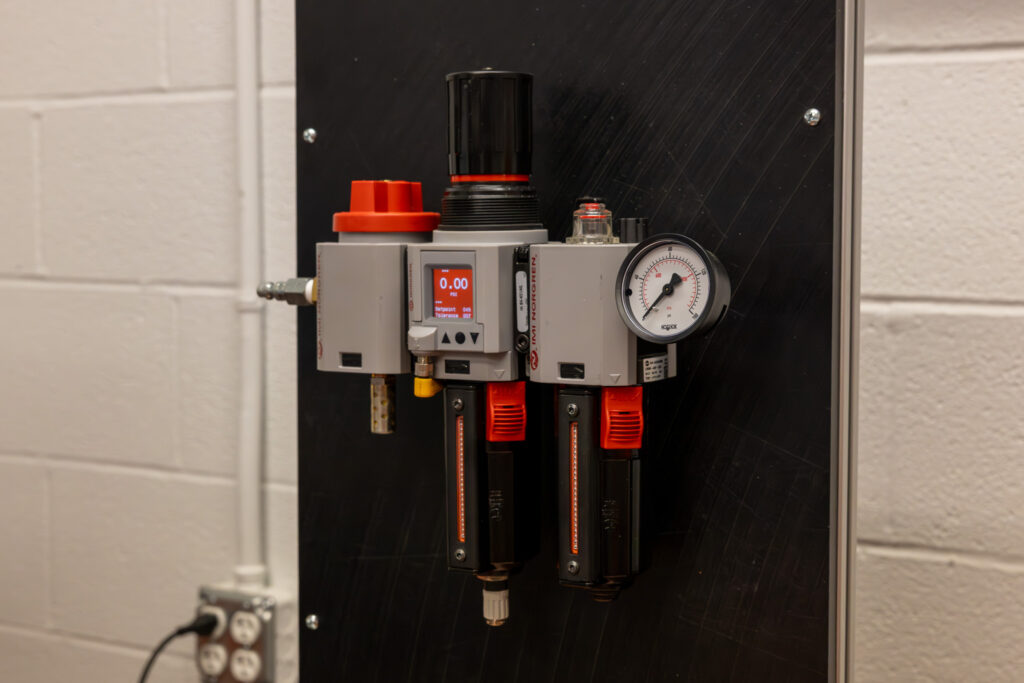
PennAir builds Filter, Regulator, Lubricator assemblies, commonly called FRL assemblies, as well as complete pneumatic air preparation packages.
From basic Filter, Regulator, Lubricator assemblies to complex air preparation systems, PennAir designs and assembles solutions configured to meet your specific performance, filtration, pressure control, drainage, and accessory needs.
Air preparation assembly capabilities include:
Designed for industrial automation and pneumatic applications requiring clean, regulated air, consistent performance, and long-term system reliability.
To help our team evaluate your pneumatic valve or air preparation assembly, send any available project information, including:
You do not need to have every detail finalized before contacting PennAir. If you are replacing an existing assembly, clear photos, component labels, and nameplate information may be enough to begin the conversation.
Reduce internal assembly work and receive a complete pneumatic solution that is built, tested, documented, and ready for installation.
Submit the form below or send PennAir your Bill of Material, schematic, existing assembly photos, and project requirements to info@pennair.com
You can see how this popup was set up in our step-by-step guide: https://wppopupmaker.com/guides/auto-opening-announcement-popups/
You can see how this popup was set up in our step-by-step guide: https://wppopupmaker.com/guides/auto-opening-announcement-popups/
You can see how this popup was set up in our step-by-step guide: https://wppopupmaker.com/guides/auto-opening-announcement-popups/
You can see how this popup was set up in our step-by-step guide: https://wppopupmaker.com/guides/auto-opening-announcement-popups/
You can see how this popup was set up in our step-by-step guide: https://wppopupmaker.com/guides/auto-opening-announcement-popups/
You can see how this popup was set up in our step-by-step guide: https://wppopupmaker.com/guides/auto-opening-announcement-popups/
You can see how this popup was set up in our step-by-step guide: https://wppopupmaker.com/guides/auto-opening-announcement-popups/
 English
  Español de México